
Reminiscence therapy taps into one of dementia’s quiet gifts: long-term memories often stay vivid long after recent ones fade. By revisiting the past through photos, objects, music, and stories, families can spark joy, connection, and calm. This guide explains what reminiscence therapy for dementia is and how to use it at home.
What is reminiscence therapy?
Reminiscence therapy involves discussing past experiences, often with the help of prompts like photographs, familiar objects, music, or smells, to stimulate memory and emotion. It is a widely used, gentle approach in dementia care that focuses on the preserved long-term memory rather than the failing short-term one.
How it may help people with dementia
Reminiscence can improve mood, reduce agitation, support a sense of identity, and create meaningful connection between the person and their caregivers. Recalling happy times provides comfort and reminds the person of who they are, which can be deeply reassuring as the present grows confusing.
Reminiscence questions
Open questions about the distant past work best, such as childhood, first jobs, weddings, and favorite traditions. Let the person lead, follow their stories, and never quiz. Our guide to games and questions for dementia patients has a full list.
Memory boxes
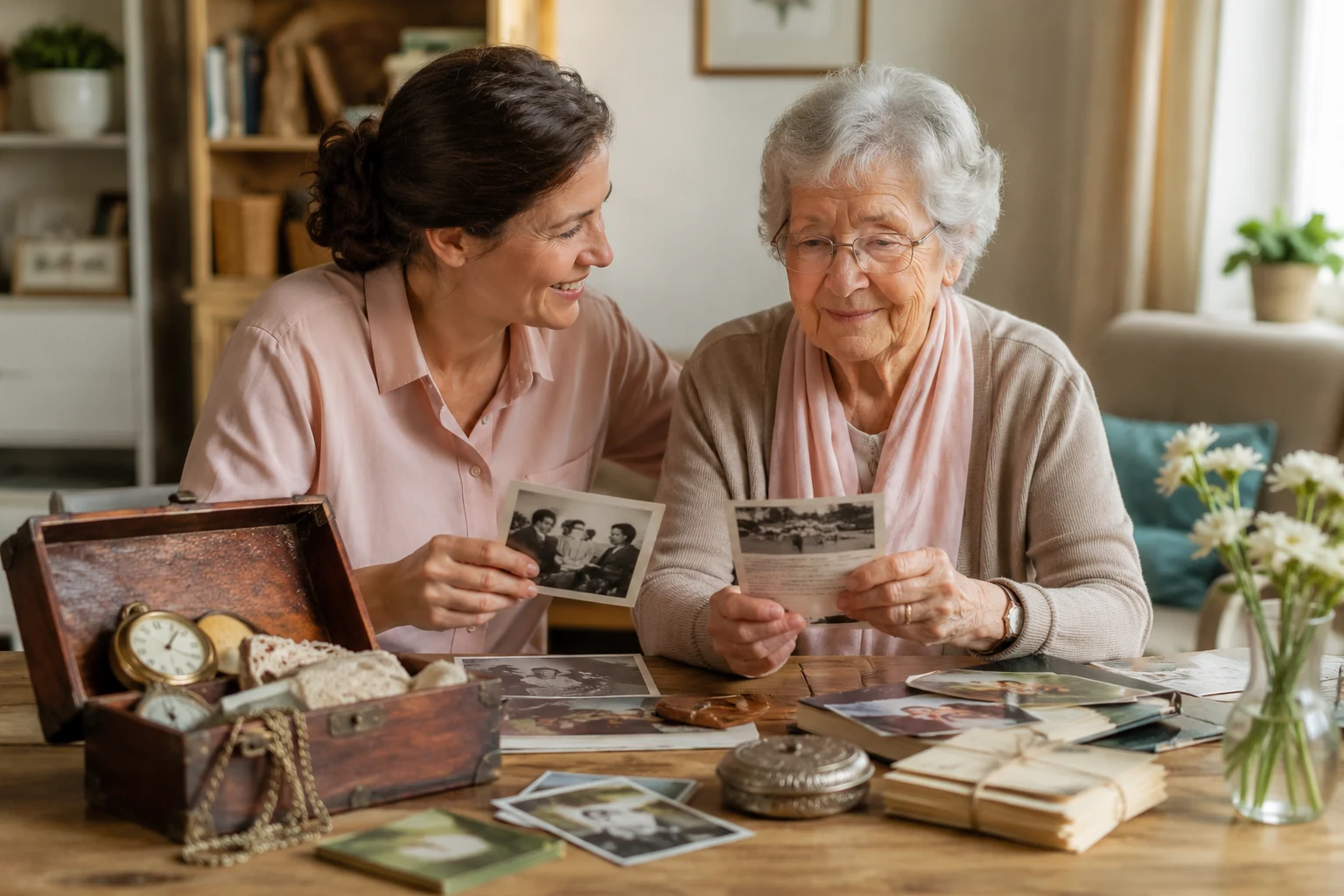
A memory box is a collection of meaningful objects, photos, mementos, ticket stubs, small heirlooms, that prompt stories and recognition. Tactile and personal, memory boxes are wonderful conversation starters and comforting to handle, especially when curated around the person’s life.
Life story books
A life story book gathers photos, key events, names, and preferences into one place. It helps the person reconnect with their identity and gives caregivers and staff valuable context. Building one together can be a meaningful project in early and middle stages.
Photos, music, objects, and scent prompts
Different senses unlock different memories. Old photographs, favorite songs from youth, familiar objects, and evocative scents like baking bread or a particular perfume can all trigger powerful recollection and emotion. Music in particular reaches people even in advanced dementia.
How caregivers can use it at home
Set aside calm, unhurried time, choose a few prompts, and simply follow the person’s lead with warmth and patience. There are no wrong answers. Keep sessions positive and gentle, and stop if anything stirs distress rather than comfort.
Want to try reminiscence therapy?
Ask us how we use memory-based activities in everyday care.
Frequently asked questions
What is a memory box for dementia?
A memory box is a personalized collection of meaningful objects, photos, and mementos used to prompt recognition, conversation, and comfort.
Does reminiscence therapy work for dementia?
It is a widely used approach that can improve mood, reduce agitation, and strengthen identity and connection by engaging well-preserved long-term memories.
Related guides
- Best Activities for Seniors With Dementia
- Games and Questions for Dementia Patients
- Best Gifts for People With Dementia
- How Often to Visit a Loved One in Memory Care
The bottom line
Reminiscence therapy uses photos, objects, music, and scents to unlock the long-term memories dementia often spares, bringing comfort, identity, and connection. Memory boxes and life story books make it easy to do at home. Keep sessions calm and led by your loved one, and let the happy memories do their gentle work.
About Created Out Of Mind
Created Out Of Mind is a knowledge hub focused on dementia care, mental health, and the practical realities families face day to day. We specialize in turning clinical guidance into steps a caregiver can actually use at home — covering daily care and behavior, memory-care decisions and costs, and the products and tools that make life easier for people living with dementia and the people looking after them.
How we write. Every article is grounded in guidance from recognized dementia and mental-health authorities and reviewed against current best practice before publication. Sources referenced: Alzheimer’s Association, National Institute on Aging.
Not medical advice. This article is for information only and is not a substitute for advice from a qualified clinician. Talk to your doctor or dementia specialist about your situation.
Last reviewed: August 23, 2026