
If you have been searching for a quick way to check for dementia, you have probably come across the “2-finger test,” the “5-word test,” and various online quizzes. These screens can be useful conversation starters, but they are not a diagnosis. This guide explains the common dementia tests, what they actually measure, and how dementia is truly diagnosed.
Disclaimer: This article is general information, not medical advice. Only a qualified clinician can diagnose dementia. Online quizzes are not a diagnosis.
Is there a simple test for dementia?
There are simple screening tools, but no single quick test can diagnose dementia. Screens like brief memory and drawing tasks flag possible problems and signal whether a fuller evaluation is needed. A real diagnosis requires a doctor combining history, cognitive testing, physical exams, and sometimes imaging.
What is the 2-finger test?
The “2-finger test” usually refers to simple tasks involving hand or finger movements that screen for certain neurological problems, and it has circulated online as a dementia check. On its own it is not a validated dementia diagnosis; it is at most a rough screen that should prompt a professional evaluation if anything seems off.
What is the 5-word memory test?
The five-word test asks a person to learn and later recall five words, testing short-term memory and recall. It is a quick screening element doctors may use as part of a larger assessment. Trouble recalling the words can indicate memory impairment worth investigating, but the test alone does not confirm dementia.
What is the 12-question test?
Twelve-question screens, like the AD8 and similar informant questionnaires, ask a family member about changes in memory, judgment, and daily function. They are helpful because they capture real-world decline a clinic visit might miss. A concerning score is a reason to see a doctor, not a diagnosis by itself.
Online quizzes vs clinical diagnosis
Online “do I have dementia” quizzes can raise awareness but are easily misread and cannot account for the many conditions that mimic dementia. Use them as a nudge to seek evaluation, never as an answer. See conditions that mimic dementia for why professional testing matters.
What doctor evaluates dementia?
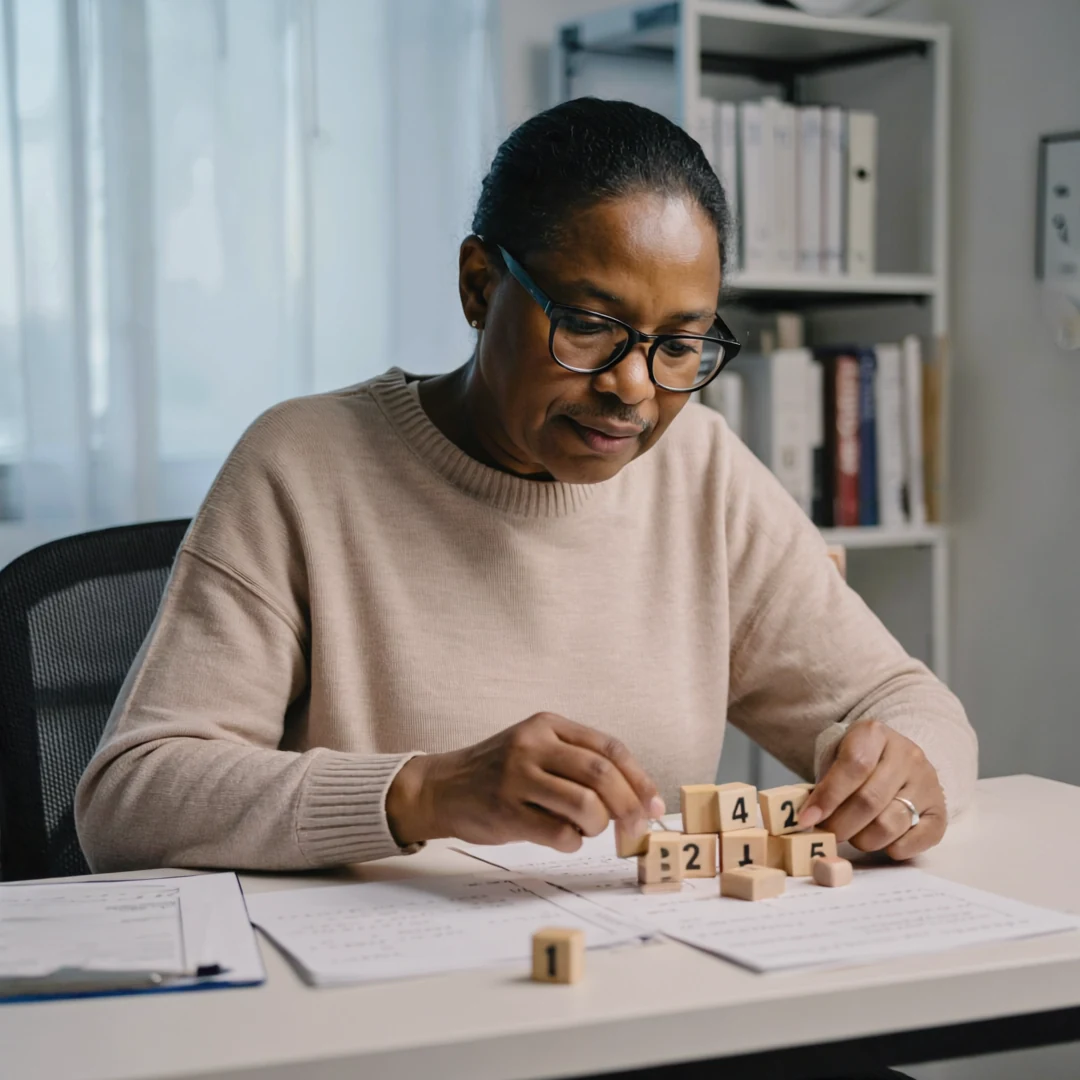
A primary care physician can begin the workup and refer to specialists such as a neurologist, geriatrician, geriatric psychiatrist, or a memory clinic for detailed cognitive testing and diagnosis.
Do MRIs diagnose dementia?
Brain imaging like MRI does not diagnose dementia by itself, but it helps by revealing strokes, tumors, or shrinkage patterns and ruling out other causes. Certain findings support specific diagnoses; for example, imaging can help distinguish vascular dementia or point toward Lewy body dementia when combined with symptoms.
When to get evaluated
See a doctor if memory or thinking changes interfere with daily life, worsen over time, or worry the family. Early evaluation catches treatable causes and allows planning while capacity remains.
Worried about memory changes?
A proper evaluation is the only way to know. Our team can help you plan the next steps.
Frequently asked questions
What is the 2-finger test for dementia?
It refers to simple finger or hand movement tasks shared online as a quick screen. It is not a validated diagnosis and should only prompt a professional evaluation.
What are the 5 words used in the dementia memory test?
The specific words vary by version; the test simply asks a person to learn five unrelated words and recall them a few minutes later to screen short-term memory.
Does Lewy body dementia show up on MRI?
MRI alone does not confirm Lewy body dementia, but imaging combined with symptoms and other scans can support the diagnosis and rule out other causes.
Related guides
- What Conditions Can Mimic Dementia?
- Dementia vs Forgetfulness, Amnesia, and Senility
- The 7 Stages of Dementia
- What to Do After a Dementia Diagnosis
The bottom line
The 2-finger, 5-word, and 12-question tests are quick screens, not diagnoses. They can flag a problem and prompt action, but only a doctor’s full evaluation, sometimes with imaging, can diagnose dementia and rule out treatable mimics. If screens or daily life raise concern, get a professional assessment.
About Created Out Of Mind
Created Out Of Mind is a knowledge hub focused on dementia care, mental health, and the practical realities families face day to day. We specialize in turning clinical guidance into steps a caregiver can actually use at home — covering daily care and behavior, memory-care decisions and costs, and the products and tools that make life easier for people living with dementia and the people looking after them.
How we write. Every article is grounded in guidance from recognized dementia and mental-health authorities and reviewed against current best practice before publication. Sources referenced: Alzheimer’s Association, National Institute on Aging, Mayo Clinic.
Not medical advice. This article is for information only and is not a substitute for advice from a qualified clinician. Talk to your doctor or dementia specialist about your situation.
Last reviewed: October 8, 2026